
For parents · Article
Crayons, Colored Pencils or Markers: How to Pick Art Supplies by Age
A lot of art kits try to solve this by putting crayons, pencils, and markers in the same box. That can be fun for a slightly older child who already has a preference. For a younger one, it often means a lid full of tools and no clear place to start. You usually do not need all three at once. Start with one mark-maker that fits the hand in front of you, keep the set small, and add a second tool when the first one is genuinely in use.
This is a practical guide for parents, grandparents, and teachers. It is not a product ranking, and it is not a developmental test. Children vary, and the ages below are only a rough way to talk about typical use.
The short version
If you only read one thing on this page, read this table. The rest of the article explains each row.
| Tool | Good for | Mess | Sharpening | With our books |
|---|---|---|---|---|
| Crayons | Big shapes, heavy hands, first coloring books | Low. Broken sticks and peeled paper, not stains. | None | A good match: the outlines are thick and the spaces are open. |
| Twist-up colored pencils | Smaller spaces without the sharpener step; car trips | Low. No shavings. | None. Twist up the lead. | A good match. |
| Colored pencils | Finer detail once a child wants a thinner line | Low, plus shavings when you sharpen | Yes. A sharpener with a tub helps. | A good match. |
| Washable markers | Bold color with almost no pressure | Higher. Ink can go through ordinary paper, and caps get left off. | None | Use with a spare sheet under the page. We don’t call our paper marker-proof. |
A plain comparison from our own use and the notes we print with our books. Not a ranking, and every child is different.
See the picks: crayons, pencils, sharpeners and art cases in our coloring supplies guide.
What each tool is actually like
Crayons. A crayon is short, slightly grippy, and does not need sharpening. The mark is soft and a little waxy. A standard crayon stands up to a heavy hand better than a thin pencil, and it is easy to drop back into a box. The usual tradeoffs are broken sticks, peeled paper, and color that does not look as bold as marker ink. For most kitchen-table coloring, crayons are still the simplest first tool.
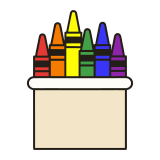
Crayons, 24 count (pack of 2)
The kitchen-table classic. Two boxes means one for home and one for the car or Grandma’s house.
Colored pencils. A colored pencil makes a thinner line and is better for smaller shapes once a child wants more control. It also asks more of the hand: enough pressure to leave a mark, and a sharpener (or a twist-up style) when the point is gone. A 12-count set is enough to start. A 24- or 50-count set is nicer for sharing or for a child who already colors often, not a requirement for a first pencil.

Double-Hole Tub Pencil Sharpener
Two hole sizes and a shavings tub that keeps the table clean.
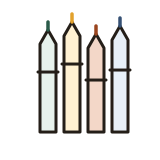
Twistables Colored Pencils, 50 count
Twist-up pencils, so there’s no sharpener to hunt for. A generous set for sharing between siblings.
Markers. Markers give bold color with almost no pressure, which is why many children reach for them. The costs are real: ink can go through ordinary coloring-book paper onto the next picture or the table, caps get left off, and even washable ink is easier to manage on a wipeable surface than on a sofa. If you offer markers, use washable ones, cap them when you are done, and slide a spare sheet under the page. We give the same paper note with our own books. We do not call ordinary paperback paper marker-proof.

Broad Line Washable Markers, 12 count
Bold color for big shapes. Slip a spare sheet under the page so ink doesn’t reach the next picture.
A plain walk through the ages
These are general patterns, not deadlines. The CDC describes developmental milestones as things most children (75% or more) can do by a certain age, and says its materials are not a substitute for a formal screening. If you have concerns about how your child uses their hands, the person to ask is your child's doctor, not a coloring-book publisher. Source: CDC, Milestones by 4 Years, updated 16 May 2026, fetched 10 Nov 2026.
First marks, often around two. At this stage, many children are still exploring what a mark is. A few fat crayons (or crayons broken into shorter, easier-to-hold pieces) and a large sheet of paper are usually enough. The CDC's own tips for two-year-olds include letting a child make a simple art project with you, and giving crayons or a little finger paint so they can spread, press, and make dots. Hang the paper up if you want; the point is the doing, not a finished picture. Source: CDC, Milestones by 2 Years, updated 16 May 2026, fetched 10 Nov 2026.
Skip markers here unless you can stay right there the whole time. A thick crayon is harder to smear across a wall in one stroke, and it does not dry out when the cap is missing.
Preschool, often around three. Hands are usually steadier, and short sit-down times at a table start to work. The CDC notes that by three years, most children can draw a circle when you show them how, and it suggests an "activity box" with paper, crayons, and coloring books, plus drawing lines and shapes together. Source: CDC, Milestones by 3 Years, updated 16 May 2026, fetched 10 Nov 2026.
A 24-count crayon box is a generous, ordinary choice at this point. Colored pencils can come out for a try, but they do not have to replace crayons. If you add washable markers, keep the set small (a 10- or 12-count is plenty), put a spare sheet under the page, and treat capping as part of the activity.
Around four and five, and into the early school years. Many children this age can hold a crayon or pencil between fingers and thumb, rather than in a fist. That is a CDC movement milestone for four years, not a rule you have to train for at the table. By five years, the CDC also notes that most children can pay attention for 5 to 10 minutes during activities such as story time or making arts and crafts, and that some can write some letters in their name. Sources: CDC, Milestones by 4 Years and CDC, Milestones by 5 Years, both updated 16 May 2026, fetched 10 Nov 2026.
This is usually when colored pencils start to feel useful rather than fussy, especially on pages with smaller details. Crayons can stay in the rotation for bigger shapes and for days when you do not want to sharpen anything. Markers are fine as a third option if you are willing to manage the ink.
Older children who already draw a lot may want finer pencils or more colors. That is a preference, not a next "level" every child must reach.
What we put next to our own books
Our coloring books are made with thick outlines and room for crayons or colored pencils. That is true of Snow Day Adventures and of Tide Pool Discovery. If someone at the table wants markers, slide a spare sheet underneath.
A simple setup that works for most families:
- One small crayon box within reach
- Colored pencils once the child is asking for a thinner line: twist-up pencils skip the sharpener, or keep a sharpener where an adult can hand it over
- Washable markers as an optional add, not the default
- A clip of spare paper under the book, or a second sheet you can slide in
Book and supplies are sold separately, as separate orders. Supplies are not included with the book.
If it's for a gift: gifts for kids who love to color.
If you want a longer list of supply types, we keep a coloring-supplies gift guide. This article is about how to choose, not about filling a cart.
When you are ready to choose a box, our shop page has the coloring supplies we recommend, each with a short reason.
Common snags, and a way around them
The 150-piece kit. A large case looks like a complete solution. For a younger child it can be noisy, heavy, and hard to put away. A small box that actually gets opened will be used more than a case that lives on a shelf.
Dried-out markers. If the caps were left off, do not turn the next afternoon into a hunt for "better" markers. Put the dried ones aside and go back to crayons for a while.
Broken crayons. Keep them. A short piece is often easier for a little hand than a long, new stick. A tin or a small plastic box is enough storage.
Pencil frustration. If the point keeps snapping, the child may be pressing hard, or the sharpener may be taking off too much. Try a twist-up pencil, or go back to crayons for the rest of the sitting and offer pencils again another day.
Ink on the next page. This is ordinary paper doing what ordinary paper does. It is not a defect you have to solve with a special book. Use the spare sheet, or choose crayons and pencils for that book.
Common questions
When should a child use crayons, colored pencils, or markers?
You usually do not need all three at once. Start with one mark-maker that fits the hand in front of you — crayons are still the simplest first tool — and add a second when the first one is genuinely in use. Colored pencils become useful when a child wants a thinner line. Markers are an optional third if you are willing to manage the ink.
Do washable markers need special paper in a coloring book?
We don’t call our paper marker-proof. Ink can go through ordinary coloring-book paper onto the next picture or the table. If you offer markers, use washable ones and slide a spare sheet under the page.
What art supplies go next to these coloring books?
A simple setup that works for most families: one small crayon box within reach; colored pencils once the child is asking for a thinner line (twist-up pencils skip the sharpener); and washable markers as an optional add, not the default. Book and supplies are sold separately, as separate orders.
A short way to decide
If you are standing in a store, or looking at a list, you can use three questions:
- 1. Can this child hold the tool and make a mark without a long setup?
- 2. Can I live with the mess this tool might make on a regular afternoon?
- 3. Can we put it away in a minute when we are done?
If the answer is yes to all three, that is a good tool for now. You can always add the next one later.